Homes for rent in Göd
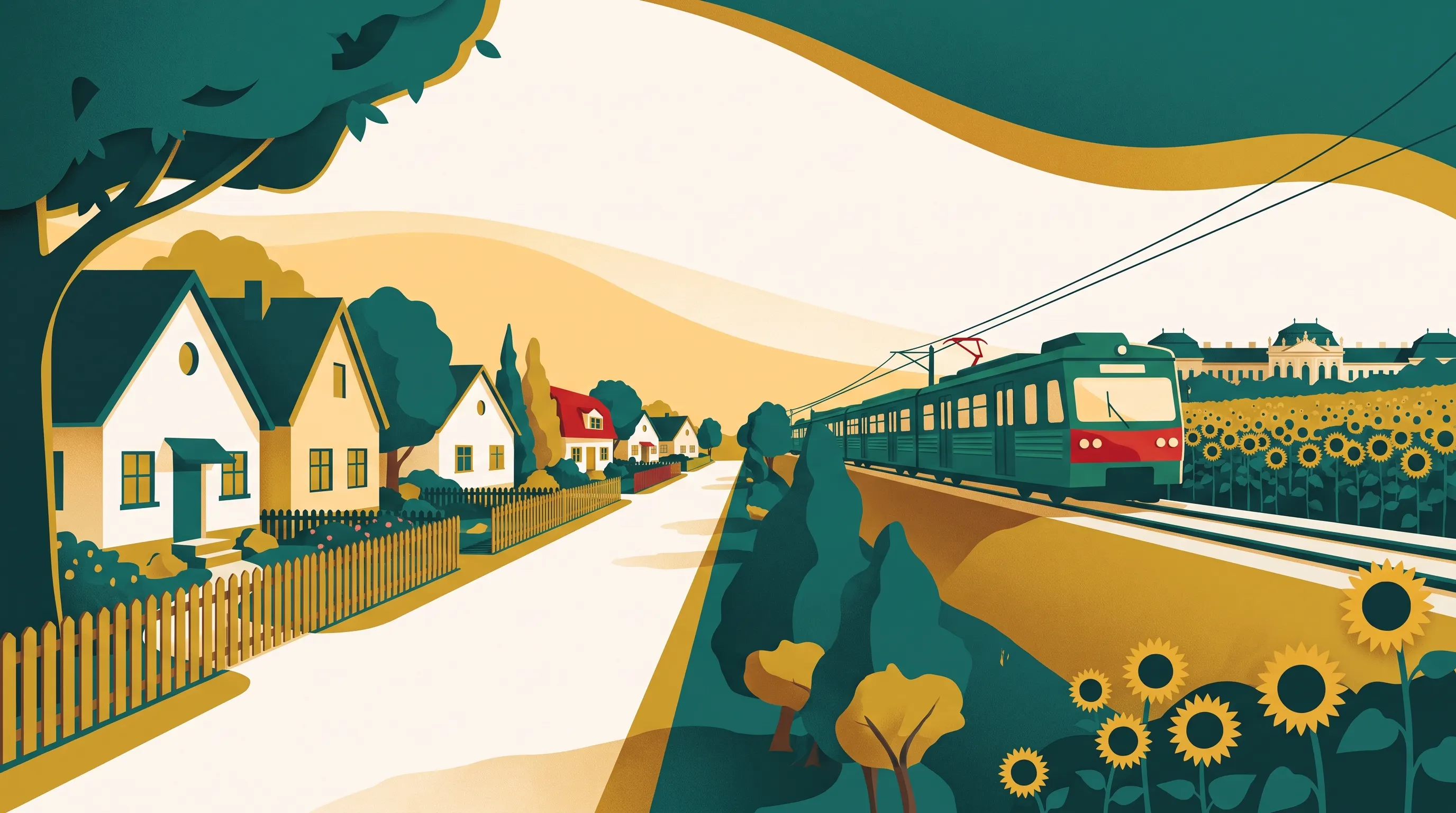
Göd: a Danube beach town further up the Vác line.
Göd is a relaxed riverside town north of Dunakeszi with a beach, thermal water and a station on the Vác line. Houses and gardens, popular with families who want the river.
Nothing listed in Göd yet
We launched in September 2026 and are adding landlords now. Have a flat to rent out here? It takes a few minutes and it is free.
A renter's guide to Göd
Göd is a town of about twenty thousand people on the left bank of the Danube, north of Dunakeszi and about twenty-five kilometres from the centre. It grew out of two villages, Alsógöd and Felsőgöd, which were merged in 1970 and still behave like two places with two stations, two centres and two sets of shops. Between the river and the railway the streets are a grid of detached houses with gardens, tall trees and a few old summer villas from the time when this was a holiday colony for Budapest families.
It is the most village-like of the three Vác-line towns near the city. There is a thermal bath by the river, a long riverside walk with a cycle path, the Huzella arboretum, two primary schools and a secondary school, a health centre and a weekly market. The battery plant on the northern edge at Bócsa has been the local argument for years and brings lorry traffic to route 2; the residential streets by the river do not notice it. Rents are a little above Dunakeszi for houses, because that is what people come here for.
Typical rent in Göd
| from | to | |
|---|---|---|
| 1 room | HUF 130,000 | HUF 180,000 |
| 2 rooms | HUF 190,000 | HUF 260,000 |
| 3 rooms | HUF 270,000 | HUF 420,000 |
Typical asking rents per month for a whole home on a long-term let, September 2026. Ranges, not quotes: a renovated flat with a lift sits at the top, a ground-floor courtyard flat at the bottom.
Getting around
- MÁV line 70 from Nyugati to Vác, with stops at Alsógöd, Göd and Felsőgöd: about 30 to 35 minutes to Nyugati, every 15 to 30 minutes at peak, and the zoned Z70 trains stop at Göd only.
- By car: route 2 through Dunakeszi and Újpest to Árpád híd, about 35 minutes off-peak and 55 to 70 minutes in the morning rush; the M2 from Dunakeszi for the M0 and the Pest ring roads.
- Volánbusz on route 2 from Újpest-Városkapu (metro 3) in 35 to 45 minutes, serving the streets along the main road; the town's own local bus is sparse.
- Within a 10-minute walk of any of the three stations a commute works without a car; the streets furthest from the railway and Bócsa are car-first.
What the homes are like
Göd is a house town with a few flats. The typical home is a detached family house from the 1960s to the 1990s on a 600 to 1000 square metre plot, often extended, with gas heating and a garage or carport, on the grid of streets between route 2 and the river. Older summer villas and cottages near the water are charming and sometimes poorly insulated. The 2000s to 2020s added terraced houses and small low-rise blocks with two and three-room flats near Göd and Felsőgöd stations and along the Dunakeszi road, which is where most of the flats to rent are; a one-room flat is rare and usually a converted annexe or an upper floor of a house.
Check the heating and insulation in anything built before 1990, whether the sewer is connected on the outer streets, and how the plot drains: the streets closest to the Danube are low-lying and a few flooded in 2013. On the new small blocks ask whether the parking space and the garden section are included in the rent.
Who it suits
Families and couples who want a house with a garden, trees and the river, a direct train into Pest and a quiet street, and who accept a commute of half an hour or more. It suits anyone working from home or in Vác and Dunakeszi as well. It does not suit anyone who wants a flat in a lively centre, or who needs the fastest possible train.
Parts of Göd
- Alsógöd
- The southern half towards Dunakeszi with its own station and small centre: family houses on quiet streets, the thermal bath and the riverside walk, and most of the newer terraced houses.
- Felsőgöd
- The northern half with its own station, church and shops: older family houses and villas on tree-lined streets, the arboretum, and the closest walk to the river beaches.
- Bócsa
- The northern edge towards Sződliget: newer family houses, larger plots, the industrial zone on route 2, and the lowest prices in the town because of it.
- Göd centre
- The streets around Göd station and the town hall between the two old villages: the market, the secondary school, the health centre, and the small low-rise blocks with flats.
Questions people ask about Göd
How long is the commute from Göd to Budapest?
By train, about 30 to 35 minutes from Göd station to Nyugati, a little more from Alsógöd and Felsőgöd. By car, about 35 minutes to Árpád híd off-peak and 55 to 70 minutes in the morning rush on route 2.
Do I need a car in Göd?
Not if you live near one of the three stations: schools, the health centre and small shops are within the town, and the train does the commute. For the big supermarkets in Dunakeszi and for the outer streets a car is close to necessary.
Are there flats to rent in Göd?
A few, in the small low-rise blocks near Göd and Felsőgöd stations and along the Dunakeszi road. The market is houses: family houses with gardens on the grid of streets, and the occasional old villa near the river.
Is Göd cheaper than Dunakeszi?
For flats, slightly; for houses, no. A detached house with a garden in Göd rents at or a little above a Dunakeszi terraced house, because that is what the town offers and Dunakeszi mostly does not. Bócsa is the cheapest part.