Homes for rent in Dunakeszi
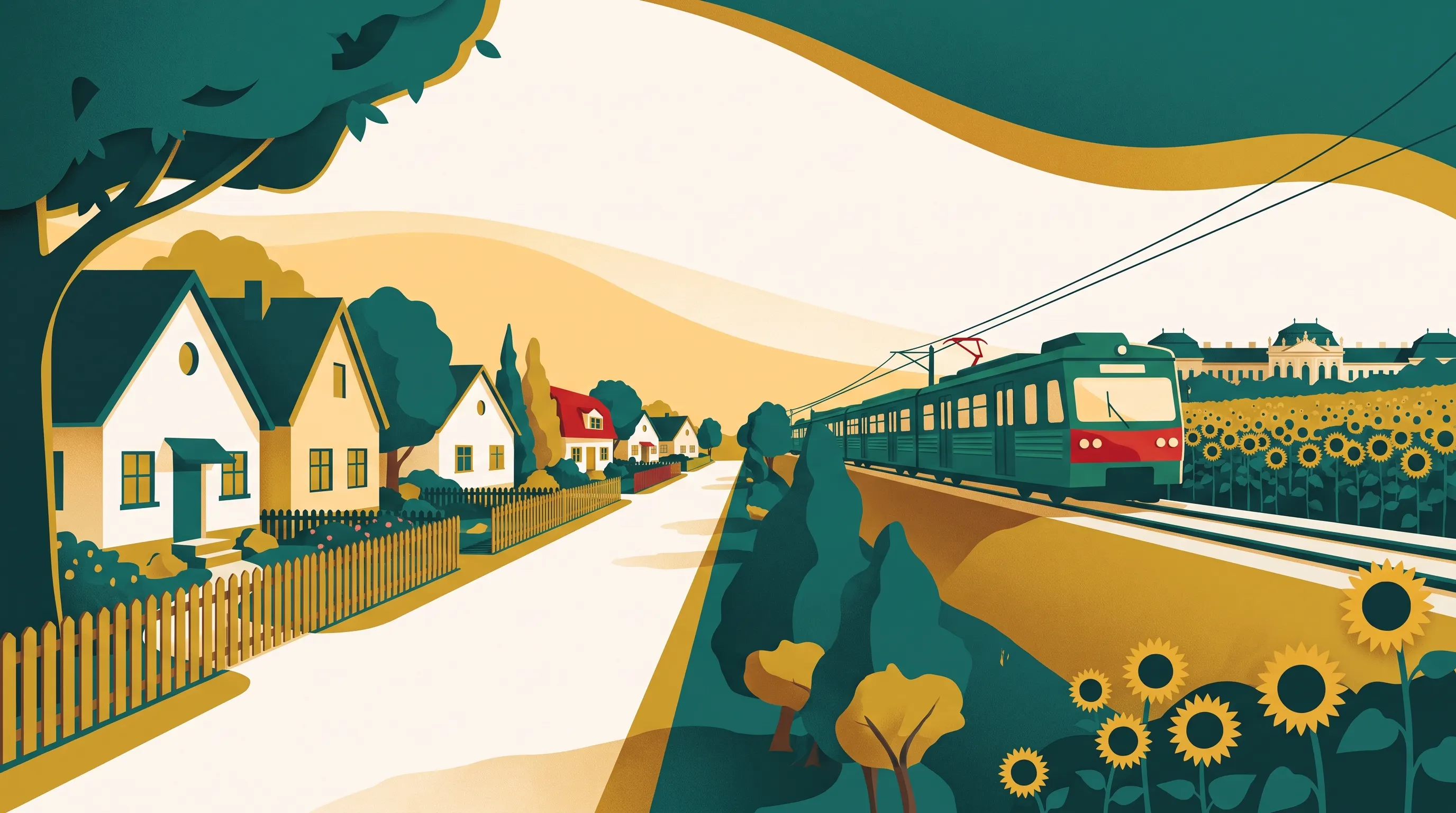
Dunakeszi: a fast-growing riverside town on the Vác line.
Dunakeszi lies north of district IV along the Danube, with new-build estates, a marina and trains into Nyugati in twenty minutes. It has flats in newer blocks as well as houses, at prices below the northern districts.
Nothing listed in Dunakeszi yet
We launched in September 2026 and are adding landlords now. Have a flat to rent out here? It takes a few minutes and it is free.
A renter's guide to Dunakeszi
Dunakeszi is a town of about forty-five thousand people on the left bank of the Danube, directly north of district IV. It is the largest town in the northern suburbs and one of the fastest-growing in the country: the population has roughly doubled since the 1990s as fields between the old village, the railway workshop colony and the river filled with terraced houses and small blocks. The result is a town that is more suburb than village, with a proper high street on Fő út, a few big supermarkets on route 2, and the river along its whole western edge.
For residents it works well as a place to live and commute from. There are several primary schools and two secondary schools, a health centre, a large sports hall, a covered market, the Alag racehorse training grounds, and a long riverside promenade with a cycle path that runs into Újpest. It is not a pretty town in the Szentendre sense; it is a practical one, and rents follow the train timetable rather than the scenery.
Typical rent in Dunakeszi
| from | to | |
|---|---|---|
| 1 room | HUF 140,000 | HUF 190,000 |
| 2 rooms | HUF 200,000 | HUF 280,000 |
| 3 rooms | HUF 280,000 | HUF 420,000 |
Typical asking rents per month for a whole home on a long-term let, September 2026. Ranges, not quotes: a renovated flat with a lift sits at the top, a ground-floor courtyard flat at the bottom.
Getting around
- MÁV line 70 from Nyugati to Vác, with stops at Dunakeszi alsó, Dunakeszi-Gyártelep and Dunakeszi, plus the small Alagimajor halt: about 20 to 25 minutes to Nyugati, every 15 to 30 minutes at peak, and the zoned Z70 trains skip the inner stops.
- By car: route 2 through Újpest to Árpád híd, about 25 minutes off-peak and 45 to 60 minutes in the morning rush; the M2 motorway from the eastern edge to the M0 and the Pest ring roads.
- Volánbusz from Újpest-Városkapu (metro 3) on route 2 into the town centre and Alag in 20 to 30 minutes, useful for the streets far from a station.
- From anywhere within a 10-minute walk of a station a commute works without a car; the newer estates on the eastern side are car-first.
What the homes are like
Dunakeszi has more flats to rent than any other town on this line. The bulk of the recent stock is 2000s to 2020s terraced houses and three to four-storey blocks with two and three-room flats, gas or individual heating, and a parking space, on the former fields east of the railway and between Alag and the M2. Near Dunakeszi station and on Gyártelep there are 1960s to 1980s panel and brick blocks with one and a half to two-room flats at the cheaper end, and the Gyártelep railway colony itself is a grid of small early-20th-century houses. Older family houses fill the streets of the original village around Fő út and the riverside, many rebuilt or extended.
In the new terraced builds check the sound insulation between houses and whether the parking space is included in the rent. In the panel blocks near the station ask about the heating bill and the lift. Riverside streets close to the Danube are outside the flood defence in a few places; ask about the 2013 and 2024 high water.
Who it suits
Commuters to the Pest side who want a newer flat or a terraced house with a garden, a fast train and a supermarket nearby, and are willing to trade charm for convenience. It suits couples and young families in particular. It does not suit anyone looking for village quiet or old-town character; for that look further up the line at Göd or across the river at Szentendre.
Parts of Dunakeszi
- Alag
- The northern part around the racehorse training grounds and Alagimajor halt: older family houses, big plots, some new terraced streets, and a quieter feel than the centre.
- Gyártelep
- The railway workshop colony south of the centre with its own station: small colony houses, 1970s blocks, and the cheapest flats in the town.
- Duna part
- The riverside streets and the promenade along the Danube west of Fő út: older family houses, a few newer villas, and the cycle path into Újpest.
- Auchan and Tesco zone
- The retail strip on route 2 at the southern edge towards Fót, with the M2 junction, the new estates behind it, and the traffic that comes with both.
Questions people ask about Dunakeszi
How long is the commute from Dunakeszi to Budapest?
By train, about 20 to 25 minutes from Dunakeszi station to Nyugati. By car, about 25 minutes to Árpád híd off-peak and 45 to 60 minutes in the morning rush on route 2.
Do I need a car in Dunakeszi?
Not if you live within walking distance of one of the three stations; shops, schools and the health centre are all inside the town. On the newer estates towards the M2 and in the outer parts of Alag a car makes daily life easier.
Are there flats to rent in Dunakeszi?
Yes, more than anywhere else on the Vác line: newer two and three-room flats in low-rise blocks, panel flats near the station, and a lot of terraced houses. One-room flats exist but are few, mostly in the older blocks.
Is Dunakeszi expensive to rent in?
It is in the middle for the northern suburbs: below Szentendre and the new builds in Göd, above Fót, and clearly cheaper than the same flat in district IV or XIII. The new terraced houses carry the top of the range; Gyártelep is the bottom.