Homes for rent in Budakeszi
Budakeszi: forest walks, a wildlife park and a proper small town.
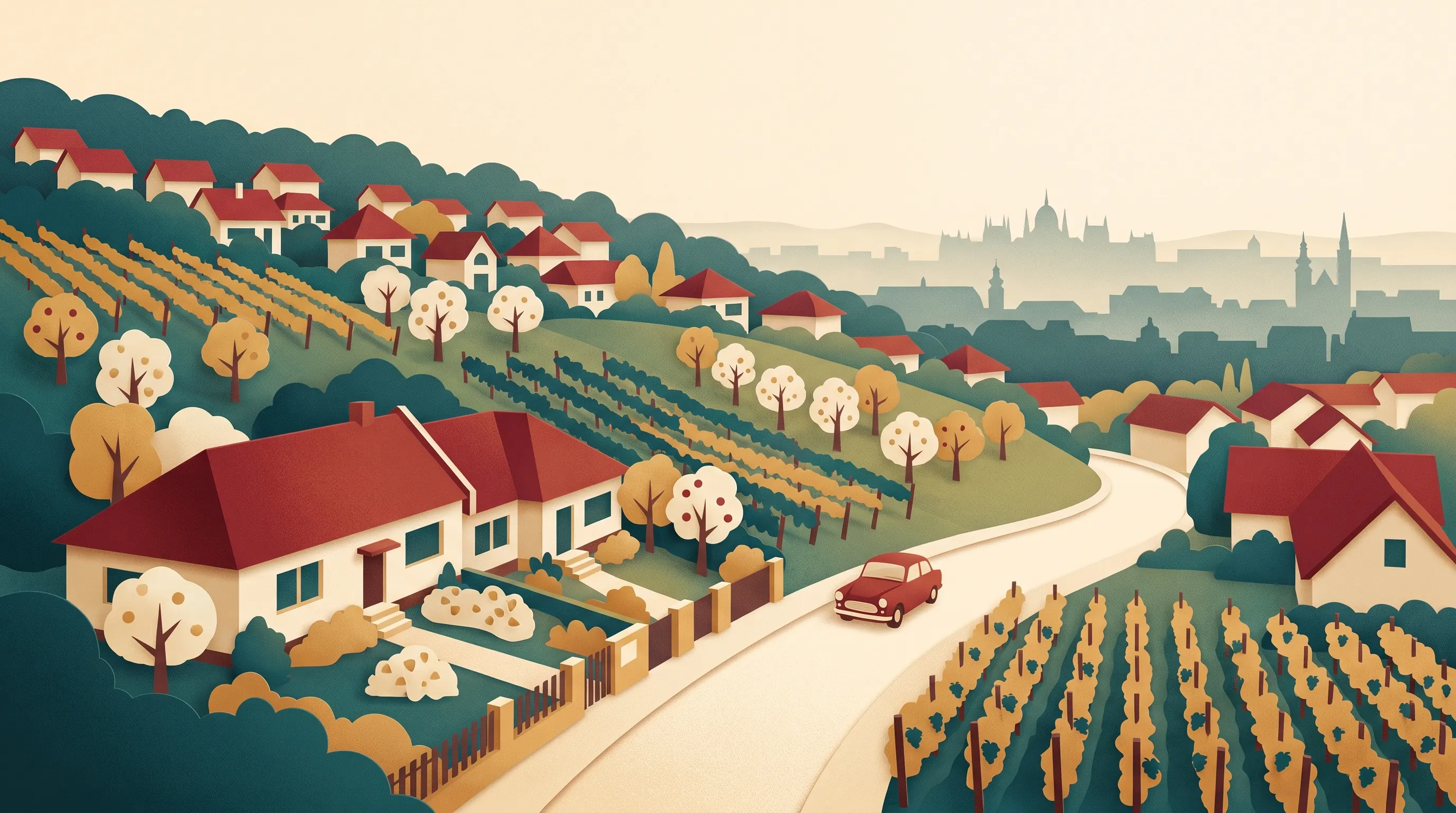
Budakeszi is tucked behind district XII in a valley of the Buda hills. It has a real high street, schools and the Budakeszi Wildlife Park, with the forests of Normafa within walking distance. Buses run to Széll Kálmán tér; houses with gardens dominate the market.
Nothing listed in Budakeszi yet
We launched in September 2026 and are adding landlords now. Have a flat to rent out here? It takes a few minutes and it is free.
A renter's guide to Budakeszi
Budakeszi sits in a bowl of the Buda hills just over the ridge from district XII, close enough that the Normafa forest paths run straight into the town's northern streets. Fő utca is a genuine high street with a church, the town hall, a pharmacy row, bakeries, cafés and small supermarkets; the town has its own primary schools, a grammar school, a music school, a sports hall, and the Budakeszi Wildlife Park on the forest edge. About 15 000 people live here, and the feel is of a small town that happens to be ten minutes from Buda.
The old core is Swabian, with long plots and low houses; around it the slopes of Makkosmária and the Nagyszénászug side are filled with family houses from every decade since the 1960s, plus newer terraced developments. Forest is on three sides, which is the reason most people choose it.
There is no railway. The town lives on the bus to Széll Kálmán tér and on the car; the road over the ridge is short but slow in the morning, and there is no motorway junction of its own, so Budaörs and the M1/M0 are a 10 to 15 minute drive.
Typical rent in Budakeszi
| from | to | |
|---|---|---|
| 1 room | HUF 150,000 | HUF 210,000 |
| 2 rooms | HUF 210,000 | HUF 300,000 |
| 3 rooms | HUF 300,000 | HUF 500,000 |
Typical asking rents per month for a whole home on a long-term let, September 2026. Ranges, not quotes: a renovated flat with a lift sits at the top, a ground-floor courtyard flat at the bottom.
Getting around
- BKK buses 22, 22A and 222 from Széll Kálmán tér (M2) through Budakeszi út to the town centre in 25 to 35 minutes; then M2 to Deák in 6 minutes, so 40 to 50 minutes door to door.
- Bus 222 continues out to the wildlife park and the hillside streets; Volánbusz lines link to Páty, Telki and Zsámbék.
- No railway station; the nearest are Budaörs and Kelenföld, both a drive or a bus away.
- By car: Széll Kálmán tér in 15 to 25 minutes over the ridge, Kelenföld in 20, the city centre 30 to 45; the M1 and M0 at Budaörs in 10 to 15 minutes.
What the homes are like
Houses are the market: old village houses on Fő utca and the side streets, 1970s and 1980s two-storey houses on the slopes often split into two flats with a shared garden, 1990s villas on Makkosmária with views and garages, and newer terraced and semi-detached houses on the edges. A three-room listing is a house or the larger half of one. Plots are big by Budapest standards and a garden is the default.
Flats are limited to small condominiums near the centre and a few older low blocks, mostly 2-room and 50 to 70 square metres with gas boilers. On the hillside ask about heating costs (older houses on gas convectors are expensive in winter), the state of the roof and windows, and how the street is cleared of snow; some of the upper streets are steep.
Who it suits
Budakeszi suits families with a car who want forest on the doorstep, a real high street and good schools, including easy access to the international schools of district XII. It suits people working on the Buda side, in Széll Kálmán tér or Kelenföld. It does not suit someone who needs a train or works in Pest; the bus over the ridge is the only public link, and the morning queue is real.
Parts of Budakeszi
- Centre and Fő utca
- The Swabian core with the church, the town hall, shops and cafés along the high street, and the main bus stops. Walkable, the easiest part without a car.
- Makkosmária
- The hillside neighbourhood to the south-east with villas, gardens and views, plus the pilgrimage church. The most expensive streets, car needed.
- Nagyszénászug and the forest edge
- The northern and western streets backing onto the woods, with older holiday houses converted to homes and newer family houses. Quiet, green, furthest from the bus.
- Wildlife park side
- The streets toward the wildlife park and the Budakeszi forest, served by bus 222; family houses and forest walks from the gate.
Questions people ask about Budakeszi
Is Budakeszi a good place to live?
It is one of the most liked towns west of Buda, for the forest, the schools and the proper high street. Families settle here for years rather than months. The catch is the single road over the ridge; if your commute is to Pest, budget an hour.
How far is Budakeszi from central Budapest?
About 12 kilometres. Bus 22 or 222 to Széll Kálmán tér takes 25 to 35 minutes and the M2 to Deák six more, so 40 to 50 minutes. By car it is 30 to 45 minutes, slower in the morning on Budakeszi út.
How much does a house cost to rent in Budakeszi?
A three-room family house with a garden typically asks 300 000 to 500 000 forints a month, with Makkosmária villas above that. Halves of split houses and two-room flats near the centre run from about 210 000 to 300 000.
Can I live in Budakeszi without a car?
Near the centre and the bus route, yes: the high street covers daily needs and the bus is frequent. On the hillside and the forest edge it gets hard, since local buses are sparse and the slopes are steep. Most households here run at least one car.